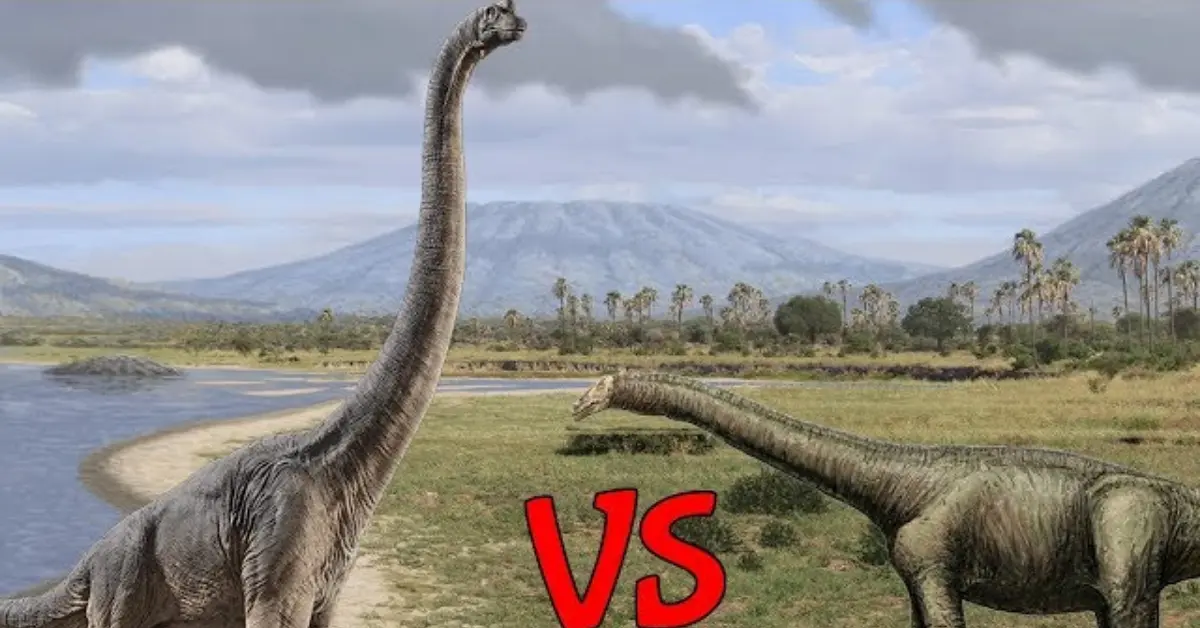
When I first learned about the appearance of ancient dinosaurs, I was struck by how easily people confuse the species, especially the giants like Brontosaurus and Brachiosaurus, because both were enormous sauropods that lived across the late Jurassic, mid Jurassic, and early Cretaceous stretches of deep time measuring in million years; yet their differences fascinated me as a student—one being an elephant-like dinosaur and the other a giraffe-like creature with long limbs and a long-neck.
Sometimes even called an arm lizard, and while exploring fossil sites in North America, Africa, and Tanzania, I realized how each genera evolved unique body structure, feeding strategies, and ways of holding their necks, with Brontosaurus remembered as one of the best-known and largest land animals, often thought of as among the longest, and Brachiosaurus rising above many as one of the tallest beings ever to walk Earth, making their ongoing debate about size and shape truly iconic.
What is a Brontosaurus?
When I first studied ancient dinosaurs, the Brontosaurus stood out to me as a large sauropod with a calm presence, even though it lived 163.5 million to 100.5 million years ago during the late Jurassic and early Cretaceous periods. I remember being fascinated by how this so-called thunder lizard earned its name from Greek, especially after learning that Othniel Charles Marsh believed the ground must have thundered when such a huge animal walked by.
Scientists once grouped it with Apatosaurus under the same genus, but later research revealed distinct characteristics that led to a separate genus containing the species B. excelsus, B. yahnahpin, B. parvus, and even the variant B. yahnahton. What struck me most was how this creature balanced its small head, slender neck, and overall herbivorous lifestyle with massive measurements, such as a height 28 feet, a length 72 feet to 85 feet, and a weight reaching 30.5 tons, making it one of the best-known and longest animals to ever walk the earth.
Read More: Difference Between Salon and Saloon
As I explored the anatomy deeper, the structure of its forelimbs, hindlimbs, forelegs, and hind legs showed how much shorter the front of its body was compared with that of Brachiosaurus, giving it a different stance altogether. Its long neck, long tail, and especially its long whip-like tail—often used as a weapon—added to its unique silhouette.
Inside, the vertebrae told their own story: the deeply bifurcated neck held spines that were paired, creating a wide neck and deep neck supported by a system of 15 cervicals, ten dorsals, five sacrals, and 82 caudals. Even the dorsal ribs, which were neither fused nor tightly attached but instead loosely articulated, hinted at a flexible torso supported by internal air sacs. When I first saw reconstructions based on these features, I realized how every detail—from Bractosaurs comparisons to skeletal counts—helped bring this incredible creature to life in my imagination.
What is Brachiosaurus?
When I first studied Brachiosaurus, I was amazed at how different this giant, giraffe-like dinosaur looked compared to other sauropods I had seen in museums. Its long neck and the meaning of its name—an arm lizard with limbs that were unusually long—made it instantly memorable. Fossils found in North America, Africa, and Tanzania showed that it lived during the mid Jurassic to late Jurassic, around 155.7 million to 150.8 million years ago.
What stood out to me most during my field studies was how its larger front legs and shorter hind legs gave it a naturally raised posture, helping it become one of the tallest dinosaurs on Earth, often reaching 40–50 feet and weighing nearly 50 tons. As herbivores, they fed on cycads, ginkgos, and conifers, consuming as much as 400 kg of plant dry matter daily, and their distinct large nare on the skull and short tail added even more character to this already iconic creature.
While comparing sauropods for the first time, I realized just how much a large sauropod like Brachiosaurus relied on its unusual design to reach tree canopies that others couldn’t. Its forelegs longer than its hind legs shorter created a steeply inclined trunk, and its massive size—from 31′-43′ tall, with a body 59′-69′ long and 8′-11′ broad—made it stand apart from its relatives. Like other gymnosperms specialists, it had a network of air sacs connected to its lung system, stretching through the neck, trunk, vertebrae, and ribs.
Read More: Difference Between Plant and Animal Cell
Processes such as bone resorption helped reduce body density, giving this giant surprising efficiency for its scale. Its neck, held in an elegant S-shaped curve, featured elongated neck ribs along the underside, overlapping vertebrae, and linking to powerful neck muscles that controlled the distal portions of the neck. Even the internal bony rods, the slight shoulder hump near the third dorsal vertebra and fifth dorsal vertebra, and the unique vertebral processes made its frame distinct, especially when paired with a rib cage that was deep compared to other sauropod dinosaurs.
What is the Difference Between Brontosaurus and Brachiosaurus?
When I first compared these two giants, I noticed how the Brontosaurus carried a heavier, grounded look, something that matched its old nickname, the thunder lizard, given when Othniel Chares Marsh described it in 1879. Its body often reached 15 metric tons, stretching nearly 72 ft long, and its build showed forelegs shorter than its hind legs, which made its frame sit lower to the ground.
From what I’ve seen in field notes and fossil displays, this dinosaur spent much of its time feeding on grass and ground vegetation, using its whip-like long tail for balance or even defense. In contrast, the Brachiosaurus—a true sky-reaching browser—was labeled an arm lizard because Elmer S. Riggs recognized its unusual posture when he described it in 1903, noticing how its forelegs longer than its hind legs lifted its chest high above the ground.
The more I studied these animals, the more I appreciated how differently they behaved and fed. The Brachiosaurus stood among the largest dinosaurs, weighing somewhere between 28–58 metric tons and stretching 59–69 ft long, which helped it live as a high browser that reached into tree canopies, supported by a comparatively shorter tail that wasn’t used the same way as that of Brontosaurus.
This towering stance gave Brachiosaurus a completely different lifestyle than Brontosaurus, even though both belonged to the sauropod family. When I explain these contrasts to others, I always highlight how posture, limb proportions, and feeding habits reveal a deeper story—one grounded in anatomy that shaped two very different prehistoric worlds.
Frequently Asked Questions (FAQ)
Were Brontosaurus and Brachiosaurus the same dinosaur?
No. They were two different sauropods with distinct body shapes, limb proportions, and feeding habits.
Which one was bigger—Brontosaurus or Brachiosaurus?
Brachiosaurus was generally taller and heavier, while Brontosaurus was long and lower to the ground.
Why is Brachiosaurus called the “arm lizard”?
Because its front legs (forelimbs) were longer than its hind legs, giving it a raised, giraffe-like stance.
Why is Brontosaurus called the “thunder lizard”?
Its name comes from the idea that the ground would “thunder” under the weight of such a massive creature.
Which dinosaur was discovered first?
Brontosaurus was described in 1879, while Brachiosaurus was described in 1903.